Bike

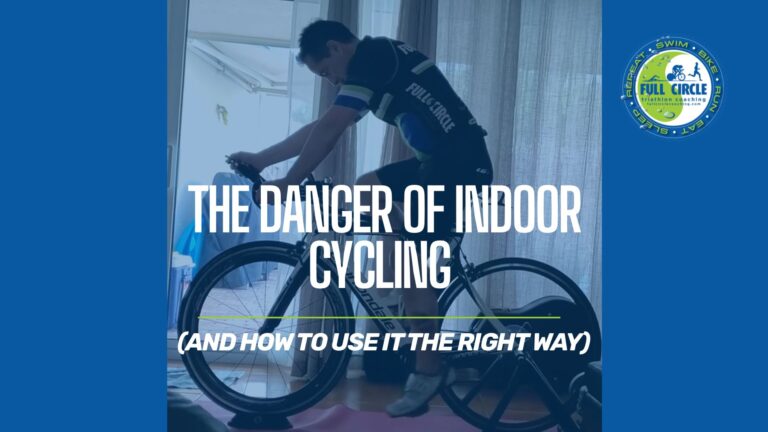
  • The Danger of Indoor Cycling (and How to Use It the Right Way)

    Indoor cycling has exploded in popularity — from platforms like Zwift and Peloton to structured trainer workouts at home.

    And while these tools can be incredibly effective…they can also quietly derail your training if you’re not careful.

    As both a triathlete and a coach, this is something I see all the time. Athletes working hard. Showing up consistently. Sweating through every session.

    But not actually improving.

    Let’s talk about why.

    The Real Problem with Indoor Cycling

    The issue isn’t indoor cycling itself, it’s how people are using it.

    Many athletes fall into the trap of:

    • Riding hard every session
    • Racing multiple times per week
    • Following random workouts with no progression
    • Skipping recovery

    It feels productive. But it’s not.

    As cycling coach Hunter Allen explains, riding hard 5–6 times per week indoors is “a recipe for disaster” because it fails to train the correct energy systems and increases the risk of burnout or poor performance later on .

    And this lines up with broader coaching guidance the body needs a balance of intensity, volume, and recovery, not constant stress .

    Why “Riding Hard Every Day” Doesn’t Work

    Here’s the truth most people don’t want to hear:
    👉 More intensity does NOT equal better results

    Your body adapts through:

    • Progressive overload
    • Structured intensity
    • Recovery

    Without that structure, you’re not building fitness, you’re just accumulating fatigue. And eventually, that shows up as:

    • Plateaued performance
    • Poor outdoor riding
    • Increased injury risk
    • Burnout or loss of motivation

    Indoor Cycling vs Outdoor Riding (They’re Not the Same)

    Indoor training is a tool but it’s not a perfect replacement for outdoor riding.
    Why?

    • No terrain variability
    • No real-world bike handling
    • Limited position changes
    • Different muscle recruitment patterns

    This is why athletes who only ride indoors often struggle when they transition outside. Specificity matters.

    If your goal is to race outdoors, you need to train outdoors regularly too.

    How to Use Indoor Cycling Effectively

    Indoor cycling becomes powerful when it’s used with intention. Here’s what that looks like:

    1. Follow a Structured Plan

    Random workouts = random results. A good plan includes:

    • Easy days
    • Hard days
    • Progression over time
    • Recovery built in

    2. Train the Right Energy Systems

    Not every ride should be “all out”.
    You need:

    • Aerobic base work
    • Threshold sessions
    • Speed work (in moderation)

    3. Prioritize Recovery

    Your body doesn’t improve during workouts, it improves after them.

    4. Combine Indoor + Outdoor Riding

    Use indoor sessions for:

    • Precision workouts
    • Controlled intervals

    Use outdoor rides for:

    • Skill development
    • Race-specific preparation

    The Biggest Mistake I See Athletes Make

    They confuse effort with progress.

    Just because something feels hard doesn’t mean it’s helping you reach your goals.

    Indoor platforms are designed to keep you engaged often by encouraging you to push harder, more often.

    But training isn’t about entertainment.

    It’s about purpose.

    So… Is Indoor Cycling Bad?

    Not at all.

    It’s one of the best tools we have, when used correctly. But without a plan?
    It becomes exactly what I warn my athletes about:

    👉 A lot of work… with very little return.

    Want Help Building a Smarter Plan?

    If you’re currently:

    • Riding a lot but not seeing progress
    • Unsure how to structure your training
    • Relying heavily on indoor workouts

    Let’s fix that.

    👉 Book a free call here and we’ll map out a training approach that actually works for your goals, your schedule, and your race season.


  • What Shoes Did I Wear All Through Italy?

    [vc_row][vc_column][vc_column_text]

    What Shoes Did I Wear All Through Italy?

    Flip flops and Xero Shoes.

    Over 50 miles of walking = ZERO foot pain.

    But that wasn’t always my story.

    For over 8 years, I battled chronic plantar fasciitis. I tried it all—orthotics, high-cushion stability shoes, endless PT, cortisone shots—and nothing worked. In fact, all that “support” just made things worse, eventually leading to knee pain and hip bursitis.

    At one point, a surgeon even recommended cutting my plantar fascia tendon. 😳

    No. Way.

    I knew there had to be another path.

    The Shift: From Support to Strength
    That’s when I dove into the work of barefoot runners, Jay Dicharry, Kelly Starrett, Runner’s Anatomy, and Born to Run.

    What I discovered changed everything:

    👉 Strong feet are the foundation of healthy, injury-free running.

    Your feet are your first connection to the ground. They send critical signals to your brain with every step, helping you stabilize. But when you’re 4 inches off the ground on a cushioned,
    narrow platform—arch support doing the work for you—you shut down your body’s natural ability to stabilize.

    Running is essentially one-legged balance with momentum. Why make it harder?

    Why Most Shoes Hold You Back
    The shoe industry keeps pushing $300–$400 shoes, adding carbon plates, and telling you they’ll only last a few runs. It’s no wonder so many runners end up injured and dependent on the medical system instead of their own strength.

    Here’s the truth:

    💥 When you strengthen your feet, ankles, and legs—the rest of your body falls into alignment.
    💥 You run stronger, longer, and with less risk of injury.
    💥 You don’t need “magic shoes” to run pain-free—you need strong feet.

    How to Start Strengthening Your Feet
    If you’ve been dealing with foot pain, recurring injuries, or just want to future-proof your running, the first step is simple: build strong, resilient feet.

    🎥 Watch my foot strength video here

    These exercises will help wake up your feet, improve stability, and lay the foundation for stronger, injury-free running.

    Ready to Take It Further?
    That’s why I created my Run Essentials Program, a system designed to help runners from 5K to marathon build strength from the ground up. You’ll learn how to:

    ✅ Strengthen feet, ankles, and hips
    ✅ Improve running form and efficiency
    ✅ Avoid the most common overuse injuries
    ✅ Run with more confidence and less pain

    👉 Join Run Essentials today

    Want to chat instead? Schedule your FREE Triathlon Breakthrough Session and let’s do it! Click here: http://www.scheduleyou.in/5ZIsVaU

    Erinne Guthrie is a USA Triathlon Level II Certified Coach since 1999 and Chief Motivating Officer at Full Circle Coaching, LLC since 2010. Creator of the 16 week Triathlon Transformation. She has been training, racing and coaching triathletes since 1997.  She is also a CHEK Holistic Lifestyle Coach Level 3, USMS Master’s Swim Coach, Motivational Speaker, Metabolic Efficiency Specialist, Mom, Mermaid and much much more.


    [/vc_column_text][/vc_column][/vc_row]

  • Can you really stay healthy on vacation? Yes—and here’s how.

    My friend asked me how to eat healthy in Rome Italy
    So I thought I’d share my reply to her here!

    First of all the food in Italy is better – plain and simple- few ingredients are healthier and real food is better super to digest.

    We compared the ingredients of Nutella, potato chips and drinks- all had zero chemicals or high fructose corn syrup.

    It truly irritates me that the USA cares so little about the quality of our food that causes us to be one of the sickest countries in the world!🌎
    More on that later. 😉

    I’m gluten intolerant in the USA but here I have eaten pizza, pasta and bread on most of my 10 days here, with zero negative side effects.

    This is called living 80/20.
    And Italy is my 20.

    I am super clean at home – 80% of the time.

    And because of that my body can handle the 20 % I am not being clean!

    I chose the ceviche, lamb, steak, pork for most of my dinners and only had bites of pasta and a few full servings.

    I did eat bread and drink wine with almost every meal except breakfast, which I never do at home but “When in Rome, do as the Romans do”

    I did have my HCL- digestive enzymes and Gluten Ease and DigestZen but only had a tummy ache one time!

    And of course I took my bitter melon when I drank wine.

    At home even 1 glass of wine gives me a hangover.

    In Italy I felt great every day!

    Walking around 15 miles in Rome and climbing 1000’s of steps I definitely kept some fitness.

    Using a gym in Florence and open water swimming in Maiori on the Amalfi Coast was so beautiful and helped me mix in some training while being lazy on the beach and boat.

    I again did not obsess about my fitness.

    Sometimes it’s good to just Let Go and enjoy!

    Choosing to keep moving in whatever way you can while traveling is a choice just like any other.

    But very doable.

    Hope you get your 20 % in a beautiful different amazing place like I did!

    Happy Summer, Happy Training!

    Oh and if you want to learn more about living 80/20 and how to Not Diet, but find your perfect balanced way of eating, training and living-
    Check out my Holistic Lifestyle and Nutrition Essentials course.

    Details here- we start a new cohort in July!

    If you’re curious about what’s possible with your training we got you covered. Help us get to know you and were you are in your training so we could better support you.
    Click here to fill out our get to know you form. We would love to connect and help you accomplish your goals!

    Want to chat instead? Schedule your FREE Triathlon Breakthrough Session and let’s do it! Click here: http://www.scheduleyou.in/5ZIsVaU 

    Erinne Guthrie is a USA Triathlon Level II Certified Coach since 1999 and Chief Motivating Officer at Full Circle Coaching, LLC since 2010. Creator of the 16 week Triathlon Transformation. She has been training, racing and coaching triathletes since 1997.  She is also a CHEK Holistic Lifestyle Coach Level 3, USMS Master’s Swim Coach, Motivational Speaker, Metabolic Efficiency Specialist, Mom, Mermaid and much much more.

  • Beat the Heat: Smart Strategies for Training and Racing in Hot Weather

    It is HOT! The hottest it’s ever been in the history of the world, according to the news!
    Please be careful when training in the heat.


    Training in the heat can cause excess dehydration, high heart rates, heat stroke, and even death if you are not careful. But you can do lots of things to help your body handle the heat and still be able to train and race. With the right strategies, you can not only cope but thrive in the heat. Here’s how:

    • Gradual Heat Acclimation.
      Start with 15-30 minutes of heat training and increase gradually each week based on your race distance. This can help your body acclimate to higher temperatures. It’s a good idea to plan some of your training at the exact time of day you will be racing so your body gets used to the heat both mentally and physically.


    • Post-Workout Sauna Sessions
      Incorporate sauna time after workouts to simulate heat stress, enhancing your body’s cooling mechanisms. Remember to hydrate adequately afterward. Sauna- sitting in a sauna post-workout for 15 minutes, building up to 20-30 minutes, can help you get used to the heat as well. If possible, do not drink water while in the sauna, but please hydrate with electrolytes post-sauna.


    • Optimize Hydration and Electrolytes
      Increase fluid intake before, during, and after workouts. Add electrolytes to your drinks and consider salty snacks to replenish sodium lost through sweat, like organic pickles or olives. Your body uses more calories and energy to keep core body temperatures down. I suggest sips of cool hydration every 10 minutes minimum in general while training, but especially if the heat is on.


    • Cooling Techniques
      Use ice packs, cold towels, or cooling vests during training. Pre-cooling with air conditioning or cold showers can also help lower core temperature before workouts. Add extra sea salt to your food and in your water bottles. Remember to add a good-quality electrolyte mix. My favorite is the watermelon electrolyte supplement from Body Health. Organic coconut water is also helpful for added electrolytes. Cool towels and sponges are sometimes offered on the race course. Using this in training works great too! Apply them to your forearms, forehead, back of your neck, and crotch area- be careful not to get your socks wet in your shoes which can cause blisters. Cool forearm sleeves can also be helpful.


    • Adjust Training Times
      Schedule workouts during cooler parts of the day, such as early morning or late evening. If that’s not possible, opt for shaded routes or indoor training. But if your run will be at midday in the heat you must train that way!


    • Dress Appropriately
      Wear light-colored, moisture-wicking clothing to reflect sunlight and facilitate sweat evaporation. A visor can shade your face without trapping heat like a full cap.


    • Listen to Your Body
      Pay attention to signs of heat exhaustion: dizziness, nausea, excessive fatigue. It’s okay to slow down or take breaks. Safety first! Pre-Cooling- being in air conditioning or under a fan before training or racing can help you handle the heat longer. Keep your face shaded with a visor instead of a closed-off baseball cap, and stay away from black helmets and race and training kits; black increases heat!


    Implementing these strategies can make a significant difference in your performance and safety during hot weather training and racing.

    Happy heat training and racing!

    If you’re curious about what’s possible with your training we got you covered. Help us get to know you and were you are in your training so we could better support you.
    Click here to fill out our get to know you form. We would love to connect and help you accomplish your goals!

    Want to chat instead? Schedule your FREE Triathlon Breakthrough Session and let’s do it! Click here: http://www.scheduleyou.in/5ZIsVaU 

    Erinne Guthrie is a USA Triathlon Level II Certified Coach since 1999 and Chief Motivating Officer at Full Circle Coaching, LLC since 2010. Creator of the 16 week Triathlon Transformation. She has been training, racing and coaching triathletes since 1997.  She is also a CHEK Holistic Lifestyle Coach Level 3, USMS Master’s Swim Coach, Motivational Speaker, Metabolic Efficiency Specialist, Mom, Mermaid and much much more.

  • Beat the Heat! How to train and race when it’s HOT outside!

    It is HOT! The hottest it’s ever been in the history of the world, according to the news!

    Please be careful when training in the heat.

    Training in the heat can cause excess dehydration, high heart rates, heat stroke, and death! But you can do lots of things to help your body handle the heat and still be able to train and race.

    • Practice training in the heat gradually. Start with 15-30 minutes and increase based on your race distance. This can help your body acclimate to higher temperatures. It’s a good idea to plan some of your training at the exact time of day you will be racing so your body gets used to the heat both mentally and physically.
    • Sauna- sitting in a sauna post-workout for 15 minutes, building up to 20-30 minutes, can help you get used to the heat as well. If possible, do not drink water while in the sauna, but please hydrate with electrolytes post-sauna.
    • Hydrate and fuel a little extra than you think you should. Your body uses more calories and energy to keep core body temperatures down. I suggest sips of cool hydration every 10 minutes minimum in general while training, but especially if the heat is on.
    • Add extra sea salt to your food and in your water bottles. Remember to add a good-quality electrolyte mix. My favorite is the watermelon electrolyte supplement from Body Health. Organic coconut water is also helpful for added electrolytes.
    • Cooler drinks can help while training in the heat, but be careful with cramping in the stomach if the drink is too cold; one tip is to hold the ice water in your mouth for a few seconds before swallowing and take smaller sips.
    • Cool towels and sponges are sometimes offered on the race course. Using this in training works great too! Apply them to your forearms, forehead, back of your neck, and crotch area- be careful not to get your socks wet in your shoes which can cause blisters. Cool forearm sleeves can also be helpful.
    • Pre-Cooling- being in air conditioning or under a fan before training or racing can help you handle the heat longer.
    • Keep your face shaded with a visor instead of a closed-off baseball cap, and stay away from black helmets and race and training kits; black increases heat!
    • Never skip an aid station on the race course; reduce your pace to keep moving forward as needed.

    I used every single one of these tips while riding across the desert during RAAM in 2022. They make a big difference when racing warmer races for my athletes and me.

    Happy heat training and racing!

    Join my private Facebook group, Triathlon Obsessed, for tons of tips and triathlon support!

    If you’re curious about what’s possible with your training, schedule your FREE Triathlon Breakthrough Session and let’s do it! Click here: http://www.scheduleyou.in/5ZIsVaU 

    Erinne Guthrie is a USA Triathlon Level II Certified Coach since 1999 and Chief Motivating Officer at Full Circle Coaching, LLC since 2010. Creator of the 16 week Triathlon Transformation. She has been training, racing and coaching triathletes since 1997.  She is also a CHEK Holistic Lifestyle Coach Level 3, USMS Master’s Swim Coach, Motivational Speaker, Metabolic Efficiency Specialist, Mom, Mermaid and much much more.

  • Full Circle Coaching Training Tips: Are you in the Zone?

    Are you using Training Zones to guide your training and racing?

    Let’s get real—are you actually training smart, or are you just training hard?

    Many triathletes fall into the trap of thinking that pushing themselves harder, faster, and longer is the key to improving performance. But if you’re constantly training in the wrong zone, you could
    be working against your own progress.

    At Full Circle Coaching, we focus on smarter, more efficient training. That means knowing which training zones to be in and when.

    👉 Here’s why your training zone matters:
    Your body uses different energy systems depending on the intensity of your workout. If you’re always pushing at high intensity, you’re likely burning sugar instead of fat, which leads to quick exhaustion, slower recovery, and eventually…burnout.

    Training in the right zones helps you:
    ✅ Build a solid aerobic base (your “engine”)
    ✅ Improve fat-burning efficiency
    ✅ Increase speed without extra effort
    ✅ Recover faster and stay injury-free
    ✅ Peak perfectly for race day

    But here’s the catch:
    Without proper testing — like metabolic efficiency testing or heart rate testing — it’s nearly impossible to know your true training zones.
    You’re just guessing…and guessing leaves results on the table.

    Want to train smarter, not harder?
    At Full Circle Coaching, we help our athletes identify their exact zones based on real data, not assumptions. It’s one of the biggest game-changers for improving performance while keeping training sustainable and fun.

    How we do it at FULL CIRCLE COACHING:

    Swim: Pace tests for different distances (long course & short course), then train the paces specific to race distance with form work and speed work at specific times in the training cycle.

    Bike: Lactate threshold field tests and or blood lactate tests, then train the most inefficient zones and zones specific to race distance.

    Run: 1 mile, 5k and 10k races for field tests and or VO2 max or Blood Lactate testing, then train the zones specific to race distance.

    After getting the results of the tests, we create the zones for training and then the periodized training plan to train certain zones for training blocks or set periods of weeks.  This is where it becomes an art and the better the communication between coach and athlete the better the coach can adjust the workouts and achieve the desired outcome.  This is what the upload function on Training Peaks and the Post Comments box in your workouts is for.  After you perform the work, you upload the results so your coach can analyze and see if you were successful. Then build upon success and keep moving forward.

    Next Step:

    We retest every 6 to 8 weeks, we tweak and adjust depending on the distance of the “A” race.  One of our motto’s is “Strong Before Long” and “Skill before Speed” even for my Ironman athletes! We prescribe minimalist training and specificity which will get you where you want to be much faster with less overuse injury and more power and strength!

    Let us guide you with a minimalist, specific training plan that gets you stronger, faster, and ready to race at your best.

    👉 Fill out our “Get to Know You” form so we can learn more about your goals, current training, and how we can support your triathlon journey: Click here

  • From Being Hit by a Car to Starting his Triathlon Journey: Meet UTC Rockstar Mark Testoni

    [vc_row][vc_column][vc_column_text]

    Rockstar Triathlete: Mark Testoni

    Coaches Notes:

    Mark and I met a year ago and almost started coaching when he was hit by a car on his bike. We had to postpone training until he recovered, and camp was the perfect kickstart to his training program. He could swim, bike, and run again, so I invited him to join us. 

    Since we have three different coaching levels at Ultimate Tri Camp, he started on day one in the C group and had enough fitness to enter the B group on day 2.

    I’m super proud of Mark for putting aside his hesitation at being a newbie and simply embracing his own process and learning each day. 

    His progress has been impressive, and I’m super excited about his 2024 Tri Season. We will start with a few sprints, move to International Distance, and end the year with a 70.3. 

    Let’s Do this, Mark! You are a Rockstar Ultimate Tri Camper!

    Age: 68

    Profession: I am a semi-retired military and tech industry executive. I am currently Chairman of cBEYONData, a software and tech services firm. 

    Why did you choose Ultimate Tri Camp for help in your triathlon journey?
    As an older athlete new to the sport, I wanted to learn and hear the experiences of others in the sport. I am pretty much a novice, but I have experience as a modestly successful distance runner from many years ago.
    Avid Peloton rider in recent years. Nowhere near a lap pool in 50 years.

    Coach Erinne articulated how the camp could help—and it did!


    Please share your BIG goals and how Ultimate Tri Camp supported you:

    1. Understand how to approach training and recovery. Discussions and listening to the experiences of athletes and coaches are all amazingly helpful.

    2. Become an effective swimmer at a distance. I arrived at camp with the ability of your average rock—floating was a challenge 😂 . I learned a number of swim drills. I watched and was very much inspired by the rest of the group and their great abilities. I am very motivated to improve—I will soon.

    3. Want to complete a 70.3 when ready—so inspired beyond watching and listening to everyone at camp. I’m a determined person, and everyone was so encouraging—I have no doubt I will get there.

    Tell me about your successes so far:

    I spent my past year recovering from a cycling accident and some secondary physical challenges. Camp timing was perfect as I am starting to ramp up.

    1. More confident in the water.

    2. Improved running and biking technique.

    3. Signed up with FCC for the complete Triathlon Transformation training program!

    What were some of your most considerable Improvements in performance at Ultimate Tri Camp?

    Swim: Arrived: swimming like a ‘listing ship.’ Departed: drilling properly and more focused.
    Bike: Better technique with riding in groups and climbing
    Run: Improved body and arm position
    Nutrition/Health: Comprehend the purpose of supplements and their use.
    Mindset: inspired and highly motivated.

    Name 2 or 3 things that have made the most significant difference in your triathlon performance after participating in Ultimate Tri Camp:

    1. Inspiration—from the athletes and coaches. Each gave me ideas, lessons, and shared experiences that genuinely moved and motivated me—even more than I could have ever expected.

    2. Network—knowing so many others with FCC is a resource, help, and encouragement.

    3. Knowledge—learned so much.

    What excites you the most about being involved in triathlon? 
    It’s the ultimate sport, where you work and compete primarily against yourself to achieve goals, yet collaborate with coaches and other athletes to pursue goals. It transcends specific abilities and drives focus, preparation, and determination. I am very excited to drive toward objectives in parallel with a great team.

    What was your favorite part of Ultimate Tri Camp?

    I’d be lying if I said it was the ‘ice plunge’ 🧊 😂. The people and camaraderie were second to none. I’ve used the word ‘inspired’ a ton at camp and after. I owe so much to everyone who attended; it boosted my journey.

    What would you say to someone on the fence about attending Ultimate Tri Camp?
    Go! It’s a safe environment for interested athletes at any level or point in their journey.

    Are you coming back next year?
    Absolutely

    Do you want results like these?

    Join us at Ultimate Tri Camp 2025 and learn cutting-edge swim, bike, run, and strength training skills to improve your speed and efficiency.

    Ultimate Tri Camp is a 7-day event guaranteed to improve physical and mental performance.
     The Ultimate Tri Camp experience touches your soul and empowers your performance like nothing you’ve ever tried.  It’s the perfect venue to fine-tune your training and get you RACE READY!

    All level triathletes are welcome.  Our triathlon camp programs are specifically designed to zone in and strengthen skills based on your athletic level.

    Register before April 15, 2024, and get 30% off the registration fee (payment plans available). Click here to register today!


    Erinne Guthrie has been a USA Triathlon Level II Certified Coach since 1999 and Chief Motivating Officer at Full Circle Coaching, LLC since 2010. She has been training, racing, and coaching triathletes since 1997.  She is also a CHEK Holistic Lifestyle Coach Level 3, USMS Master’s Swim Coach, Motivational Speaker, Metabolic Efficiency Specialist, Mom, and more.

    [/vc_column_text][/vc_column][/vc_row]

  • Beat the Heat! How to train and race when it’s HOT outside!

    Beat the Heat! How to train and race when it’s HOT outside!

    It is HOT! The hottest it’s ever been in the history of the world, according to the news!

    Please be careful when training in the heat.

    Training in the heat can cause excess dehydration, high heart rates, heat stroke, and death! But you can do lots of things to help your body handle the heat and still be able to train and race.

    • Practice training in the heat gradually. Start with 15-30 minutes and increase based on your race distance. This can help your body acclimate to higher temperatures. It’s a good idea to plan some of your training at the exact time of day you will be racing so your body gets used to the heat both mentally and physically.
    • Sauna- sitting in a sauna post-workout for 15 minutes, building up to 20-30 minutes, can help you get used to the heat as well. If possible, do not drink water while in the sauna, but please hydrate per a post sauna.
    • Hydrate and fuel a little extra than you think you should. Your body uses more calories and energy to keep core body temperatures down. I suggest sips of cool hydration every 10 minutes minimum in general while training, but especially if the heat is on.
    • Add extra sea salt to your food and in your water bottles. Remember to add a good-quality electrolyte mix. My favorite is the watermelon electrolyte supplement from Body Health. Organic coconut water is also helpful for added electrolytes.
    • Cooler drinks can help while training in the heat, but be careful with cramping in the stomach if the drink is too cold; one tip is to hold the ice water in your mouth for a few seconds before swallowing and take smaller sips.
    • Cool towels and sponges are sometimes offered on the race course. Using this in training works great too! Apply them to your forearms, forehead, back of your neck, and crotch area- be careful not to get your socks wet in your shoes which can cause blisters. Cool forearm sleeves can also be helpful.
    • Pre-Cooling- being in air conditioning or under a fan before training or racing can help you handle the heat longer.
    • Keep your face shaded with a visor instead of a closed-off baseball cap, and stay away from black helmets and race and training kits; black increases heat!
    • Never skip an aid station on the race course; reduce your pace to keep moving forward as needed.

    I used every single one of these tips while riding across the desert during RAAM last year. They make a big difference for me and my athletes racing warmer races.

    Happy heat training and racing!

    Join my private Facebook group, Triathlon Obsessed, for tons of tips and triathlon support!

    If you’re curious about what’s possible with your training, schedule your FREE Triathlon Breakthrough Session and let’s do it! Click here: http://www.scheduleyou.in/5ZIsVaU 

    Erinne Guthrie is a USA Triathlon Level II Certified Coach since 1999 and Chief Motivating Officer at Full Circle Coaching, LLC since 2010. Creator of the 16 week Triathlon Transformation. She has been training, racing and coaching triathletes since 1997.  She is also a CHEK Holistic Lifestyle Coach Level 3, USMS Master’s Swim Coach, Motivational Speaker, Metabolic Efficiency Specialist, Mom, Mermaid and much much more.

  • My New Relationship

    My New Relationship

    I’m excited to share about my new relationship.

    I’ve actually known him for over a year but have not taken the time to truly get connected.

    I was still really committed to 2 other relationships.

    Despite hanging out a few times over the last year, this one was just too aggressive for me.

    I was uncomfortable and did not have the time to commit to developing the relationship.

    But all that has changed. I am ready for something new!

    That’s not to say I will not be seeing my two other relationships occasionally!

    I already know there is a lot of potential with this one, but it does take me some time to trust and fall in love!

    But once I’m committed, I’m all in.
    Let’s see if it will stand the test of time.

    If you don’t know by now, I am talking about my BMC Time Machine triathlon bike.

    HA HA!  Did I get you?

    The other two relationships I mentioned above are my old 2013 BMC Tri bike which I absolutely LOVE and my Trek Road bike which I love too.

    So, I wanted to share how I’m going to get to know this new super hot aggressive guy.

    Easy Spins

    I’m starting off with just a few easy spins; getting a feel for this new aggressive position in my aero bars. I’m much more aero dynamic on this bike which in the end can be faster but if my neck hurts too much I may have to get some risers for the aero-bars.

    Bike Handling Drills

    I’m also doing all my bike handling drills just like I did when I first started triathlon.

    • Riding with 1 hand for 10-15 seconds and switching so I am good with either one
    • Practicing sharp u-turns
    • Figure 8’s
    • Riding close to other cyclists and holding steady
    • Taking drinks from my water bottle holding a straight line and not wobbling all over the road.

    Pedaling mechanics drills; both in and out of my aero position!

    • Single leg drills, 85 rpms and 65 rpms for 1 -2 minutes
    • Spin Ups
    • Shift Ups
    • Force Reps

    These drills really help improve my connection to the bike and improve my pedaling mechanics so when I am ready to start doing testing and intervals I will have a great base of fitness and can really train smart.

    I hope you enjoyed my little analogy.

    I’m basically saying it takes time and practice to get connected to anything new even your bike!

    So many of the athletes I work with have no connection to their bikes and wonder why they can’t go faster.

    Besides a perfect bike fit (which we offer), these types of skills and drills workouts create a deeper connection between your body and the bike.

    I have seen it time and time again after following my system for training on the bike,  power improves exponentially in short periods of time when there is a connection!

    How deep is your connection to your bike? Looking for some guidance?

    Set up your Triathlon Break through session here…..

    See you on the road.

    Curious about Full Circle’s Triathlon Transformation program? We use mediation as a form of working IN to create energy to be able to train better, longer and stronger. Want to learn more?
    You too can become the triathlete you always dreamed of! Use this link to schedule your FREE Triathlon Breakthrough Session Now! http://WWW.SCHEDULEYOU.IN/5ZISVAU

    Erinne Guthrie is a USA Triathlon Level II Certified Coach since 1999 and Chief Motivating Officer at Full Circle Coaching, LLC since 2010. Creator of Triathlon Transformation. She has been training, racing and coaching triathletes since 1997. She is also a CHEK Holistic Lifestyle Coach Level 3, USMS Master’s Swim Coach, Motivational Speaker, Metabolic Efficiency Specialist, Mom, Mermaid and much much more.

  • Drills, Drills, Drills…

    Drills, Drills, Drills…


    Why do you need to do your drills?

    I promise it’s not to annoy you, although many athletes think so…

    It is actually to program a new neuro pathway from your brain to your body to help you swim, pedal your bike or run with better form and efficiency.

    What does that mean?

    Your brain sends messages to your body to perform the movements of swimming biking and running. If you are doing it incorrectly over many days, months and years the pathway gets reinforced over time, even if it is inefficient.

    I’ll use swimming as an example.

    If you were never taught HOW to swim with proper form and technique, you find a way to move in the water that is most likely incorrect. The more you swim with incorrect form the more reinforced that neuro pathway is.

    When you decide you want to get a video analysis from an experienced coach- they should point out what you are doing well and also what you need to do differently to improve performance.

    The patterns you learned by winging it, now need to be unlearned. And new patterns created doing it the correct way.

    But just telling or showing you what you are doing incorrectly is only the first in a multi step process to correct your inefficiency.

    There are so many moving parts that go into swimming well.

    So that is where drills can greatly speed up the process of reprogramming those movement patterns.

    There is a catch.
    You must do the drills correctly if you want them to help you perform better.

    So many of my athletes skip over the drills when they get to a certain level of confidence and that is a HUGE mistake.

    Drills performed correctly as a part of every single training session can greatly improve the speed at which you become more efficient and get faster.

    Drills are created by taking a small section of each phase of the SWIM, BIKE OR RUN. For example, with the freestyle swim stroke (which has so many moving parts) the drills allow you to isolate them so you learn how to do it correctly without getting overwhelmed.

    Drills need to be performed over and over and over to perfect them so that you can then know and feel where that move falls into place within the freestyle swim stroke.

    It takes a trained eye and years of experience for coaches to be able to:

    -Assess a swimmer correctly
    -Isolate what they are doing well and what needs work
    -And then teach them the drills to practice to correct their form and
    -Finally put it all together!

    I can say for 100 % certainty I have that skill and can help you identify your limiters and give you the drills to correct them, but YOU have to do the work, repeat the drill over and over and over to create the new neuro pathway in the brain and the body so the correct form is the default move!!!

    So, if you want to improve your swimming, biking or running or any sport, you must do the drills and do them correctly over and over and over again.

    Even the best athletes in the world are doing their drills on a daily basis to reinforce good technique!!

    Happy drills training!

    Want to see how we can improve your technique?
    Reach out to learn more about our a 1-on-1 video analysis.

    Save $50 off your next video analysis in person or virtually Space is limited.

    CLICK HERE to secure your spot for a Swim Video Analysis now!

    OR, Contact me now to schedule a call and I’ll save you a spot for a session!

    Erinne Guthrie is a USA Triathlon Level II Certified Coach since 1999 and Chief Motivating Officer at Full Circle Coaching, LLC since 2010. Creator of Triathlon Transformation. She has been training, racing and coaching triathletes since 1997. She is also a CHEK Holistic Lifestyle Coach Level 3, USMS Master’s Swim Coach, Motivational Speaker, Metabolic Efficiency Specialist, Mom, Mermaid and much much more.