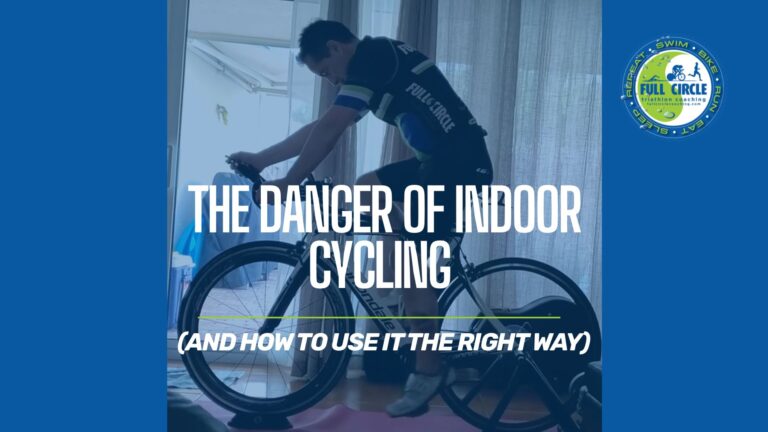
Indoor cycling has exploded in popularity — from platforms like Zwift and Peloton to structured trainer workouts at home.
And while these tools can be incredibly effective…they can also quietly derail your training if you’re not careful.
As both a triathlete and a coach, this is something I see all the time. Athletes working hard. Showing up consistently. Sweating through every session.
But not actually improving.
Let’s talk about why.
The Real Problem with Indoor Cycling
The issue isn’t indoor cycling itself, it’s how people are using it.
Many athletes fall into the trap of:
- Riding hard every session
- Racing multiple times per week
- Following random workouts with no progression
- Skipping recovery
It feels productive. But it’s not.
As cycling coach Hunter Allen explains, riding hard 5–6 times per week indoors is “a recipe for disaster” because it fails to train the correct energy systems and increases the risk of burnout or poor performance later on .
And this lines up with broader coaching guidance the body needs a balance of intensity, volume, and recovery, not constant stress .
Why “Riding Hard Every Day” Doesn’t Work
Here’s the truth most people don’t want to hear:
👉 More intensity does NOT equal better results
Your body adapts through:
- Progressive overload
- Structured intensity
- Recovery
Without that structure, you’re not building fitness, you’re just accumulating fatigue. And eventually, that shows up as:
- Plateaued performance
- Poor outdoor riding
- Increased injury risk
- Burnout or loss of motivation
Indoor Cycling vs Outdoor Riding (They’re Not the Same)
Indoor training is a tool but it’s not a perfect replacement for outdoor riding.
Why?
- No terrain variability
- No real-world bike handling
- Limited position changes
- Different muscle recruitment patterns
This is why athletes who only ride indoors often struggle when they transition outside. Specificity matters.
If your goal is to race outdoors, you need to train outdoors regularly too.
How to Use Indoor Cycling Effectively
Indoor cycling becomes powerful when it’s used with intention. Here’s what that looks like:
1. Follow a Structured Plan
Random workouts = random results. A good plan includes:
- Easy days
- Hard days
- Progression over time
- Recovery built in
2. Train the Right Energy Systems
Not every ride should be “all out”.
You need:
- Aerobic base work
- Threshold sessions
- Speed work (in moderation)
3. Prioritize Recovery
Your body doesn’t improve during workouts, it improves after them.
4. Combine Indoor + Outdoor Riding
Use indoor sessions for:
- Precision workouts
- Controlled intervals
Use outdoor rides for:
- Skill development
- Race-specific preparation
The Biggest Mistake I See Athletes Make
They confuse effort with progress.
Just because something feels hard doesn’t mean it’s helping you reach your goals.
Indoor platforms are designed to keep you engaged often by encouraging you to push harder, more often.
But training isn’t about entertainment.
It’s about purpose.
So… Is Indoor Cycling Bad?
Not at all.
It’s one of the best tools we have, when used correctly. But without a plan?
It becomes exactly what I warn my athletes about:
👉 A lot of work… with very little return.
Want Help Building a Smarter Plan?
If you’re currently:
- Riding a lot but not seeing progress
- Unsure how to structure your training
- Relying heavily on indoor workouts
Let’s fix that.
👉 Book a free call here and we’ll map out a training approach that actually works for your goals, your schedule, and your race season.